The Nairobi County Interactive Stakeholder Anti-Counterfeiting Forum, held at Weston Hotel, brought together traders, importers, small and medium enterprises (SMEs), and manufacturers in a constructive engagement with regulators, reinforcing a shared commitment to market integrity and the growth of Kenya’s manufacturing sector.

The forum emphasized a critical shift in regulatory practice: effective anti-counterfeiting interventions are best achieved through sustained dialogue, trust, and collaboration, rather than through top-down enforcement alone. Participants agreed that open, consistent engagement between regulators and businesses is essential to protecting consumers while enabling legitimate enterprises to operate and grow.

Collaborative Approaches to Curb Counterfeits

Discussions focused on practical and inclusive strategies for combating counterfeit trade without disrupting lawful commerce. Stakeholders highlighted the importance of intelligence-led enforcement, predictable regulatory processes, and shared accountability across the supply chain.

By fostering cooperation between regulators and the private sector, the forum reinforced the idea that compliance improves when businesses understand regulatory expectations and are treated as partners in enforcement rather than adversaries.


Strengthening Institutional Coordination

A key theme emerging from the forum was the need for clear institutional roles and coordinated enforcement mechanisms among agencies involved in combating counterfeits. Participants noted that improved coordination enhances operational efficiency, reduces duplication of effort, and ensures fair and consistent application of the law.

The discussions underscored the value of continuous stakeholder forums as platforms for refining enforcement frameworks, sharing information, and aligning regulatory action with market realities.


Government Commitment to Fair Trade and Consumer Protection

The forum reaffirmed the Government’s commitment to fair trade, consumer protection, and supportive regulation. Regulators emphasized that protecting intellectual property rights and eliminating counterfeit goods are critical to safeguarding consumers, preserving brand integrity, and supporting local manufacturers.

Strong collaboration between enforcement agencies and the business community was widely recognized as a cornerstone of transparent markets and sustainable industrial development.


Supporting Kenya’s Manufacturing and SME Growth

By addressing counterfeit trade through partnership-driven approaches, the forum highlighted how effective regulation can directly support Kenya’s manufacturing sector and SMEs. Reduced counterfeit penetration strengthens investor confidence, promotes innovation, and creates a more level playing field for compliant businesses.

Participants agreed that long-term success will depend on continued engagement, capacity building, and shared responsibility across public and private sectors.


Looking Ahead

As Kenya advances its industrialization and consumer protection agenda, stakeholder-driven platforms such as the Nairobi County Interactive Anti-Counterfeiting Forum provide a practical blueprint for inclusive, trust-based regulation. Through collaboration, transparency, and mutual accountability, stakeholders can protect markets, empower manufacturers, and deliver safer products to consumers nationwide.

Dr. Margaret Naserian Gakami has etched her name into Kenya’s history books after becoming the first woman in the Administration Police Service to earn a Doctor of Philosophy (PhD)—a landmark achievement that resonates far beyond the uniformed services. Her journey is not only a personal triumph but a powerful statement on the role of education, leadership, and resilience in strengthening public institutions.

From Trainee Officer to Trailblazer

Dr. Gakami’s career began at the most foundational level—as a trainee officer in the Administration Police. Through discipline, consistency, and a clear sense of purpose, she steadily rose through the ranks to become an Assistant Superintendent of Police (ASP). Each promotion reflected years of frontline service, operational responsibility, and leadership under pressure.

Today, she has served as the Sub-County Commander for Dagoretti South, one of Nairobi’s most demanding security jurisdictions. The role places her at the center of:

  • Security coordination

  • Community policing initiatives

  • Crime prevention and response

  • Multi-agency operational leadership

Dagoretti South is a high-density, high-pressure environment—making her leadership experience both intense and impactful.

Pursuing a PhD While Serving on the Frontline

What makes Dr. Gakami’s story exceptional is that her academic journey ran parallel to an active law enforcement career. Policing is defined by long hours, unpredictable deployments, transfers, and constant operational readiness. Against this backdrop, pursuing a PhD is an extraordinary undertaking.

Dr. Gakami made a deliberate and strategic decision to invest in advanced education—not as a departure from service, but as a way to deepen it.

Her doctoral studies were driven by:

  • A desire to understand leadership and institutional systems

  • The need to influence policy and organizational reform

  • A commitment to improving public service delivery from an informed, evidence-based perspective

Her achievement challenges the notion that academic excellence and disciplined service are incompatible.

“She Means Business”: Speaking Truth to Power

In an interview on She Means Business, hosted by journalist Claire Munde, Dr. Gakami offered a rare and honest reflection on her journey.

She spoke candidly about:

  • The discipline and sacrifice required to balance doctoral studies with policing

  • The emotional and physical toll of juggling family, work, and academia

  • The unspoken barriers women face in uniformed services

These barriers include entrenched cultural expectations, limited mentorship, and a scarcity of women role models at senior command and academic levels.

Her story sheds light on challenges many women experience but few get to articulate publicly.

Redefining Leadership in Uniform

Dr. Gakami’s success directly confronts long-held perceptions about career ceilings within disciplined forces. For decades, senior leadership and academic authority in security institutions have been viewed as mutually exclusive—or inaccessible to women.

Her achievement demonstrates that:

  • Education strengthens operational leadership

  • Academic insight improves institutional decision-making

  • Professional growth does not end at command roles

She represents a new model of leadership—one that blends intellectual rigor with operational credibility.


Impact Beyond the Individual

While the PhD is a personal milestone, its implications are collective. Dr. Gakami’s journey:

  • Opens doors for women officers aspiring to higher education

  • Encourages male and female officers alike to pursue academic growth

  • Reinforces the importance of professional development in police reform

As Kenya continues national conversations around policing reforms, leadership accountability, and institutional capacity-building, her story stands as proof that reform is not only structural—it is also human.

A Symbol of What Is Possible

Dr. Margaret Naserian Gakami’s journey sends a clear message:

Frontline service and intellectual growth are not opposing paths—they are mutually reinforcing.

Her life’s work affirms that disciplined forces can—and should—be spaces where knowledge, leadership, and service coexist. For young women in uniform, her story is not just inspirational; it is permission to dream bigger.

The Gakami Mustard Seed Foundation is steadily emerging as a key grassroots partner in Kenya’s environmental conservation and climate resilience efforts, with a bold commitment to community empowerment, ecosystem restoration, and sustainable development.

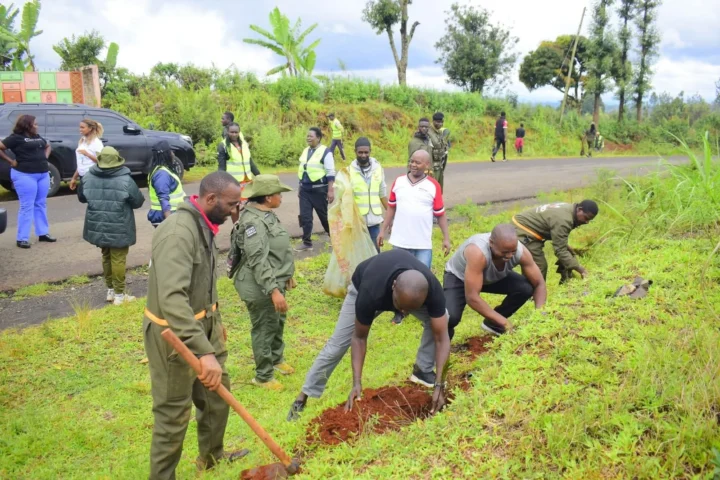
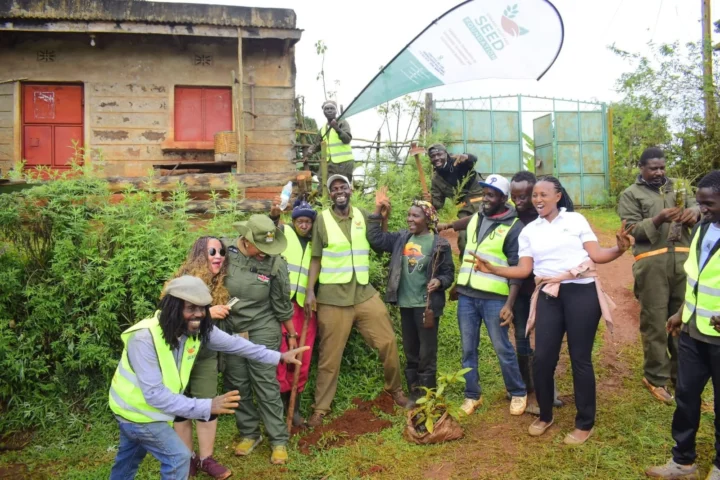
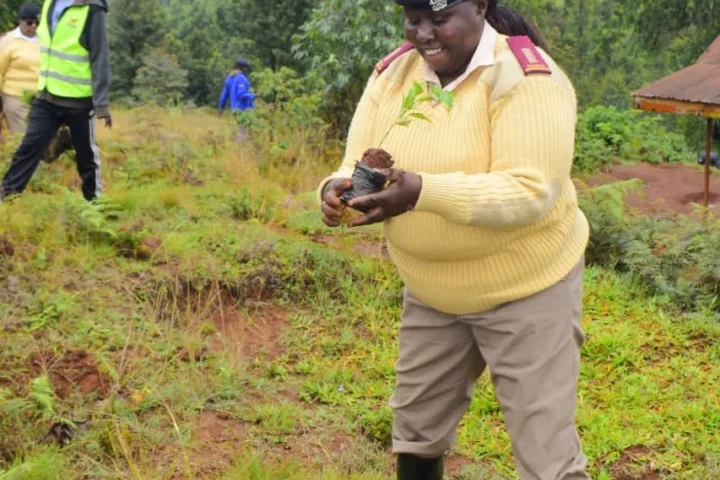
Anchored in the belief that environmental protection and socio-economic wellbeing are deeply interconnected, the Foundation has set an ambitious target to plant 15 million trees in support of the Presidential National Tree Growing and Restoration Campaign. This national initiative aims to see 15 billion trees planted across Kenya and increase the country’s forest cover to 30 percent by the year 2032.


A Vision Rooted in Sustainability and Community Impact

The Foundation’s tree-growing program goes beyond numbers. It prioritizes indigenous and fruit tree species, ensuring long-term ecological value while simultaneously enhancing food security, livelihoods, and climate change mitigation at the community level.

Through carefully coordinated planting and restoration activities, the Foundation addresses:

  • Climate change mitigation and adaptation

  • Restoration of degraded landscapes

  • Biodiversity conservation

  • Improved household nutrition and income generation

This integrated approach positions tree planting not only as an environmental intervention, but also as a practical tool for sustainable development.


Demonstrated Progress on the Ground

Under the leadership of Dr. Margaret Gakami, PhD, the Foundation has already recorded measurable impact. To date, over 500,000 assorted indigenous and fruit trees have been successfully planted across multiple regions of the country.

The leading beneficiary counties include Kajiado and Murang’a, where community participation has played a central role in ensuring tree survival, ownership, and long-term care. Local institutions, youth groups, and community leaders are actively engaged throughout the planting and nurturing process.


Leadership That Bridges Public Service and Environmental Stewardship

Dr. Margaret Gakami’s leadership brings a unique blend of public service experience, academic insight, and community engagement to the Foundation’s work. Her stewardship reflects a growing recognition that effective environmental action requires strong institutions, informed leadership, and inclusive partnerships.

By aligning conservation goals with national policy priorities and grassroots realities, the Foundation demonstrates how structured leadership can translate vision into tangible outcomes.


Call for Partnerships and Corporate Support

To achieve its 15-million-tree milestone, the Gakami Mustard Seed Foundation is actively inviting partnerships with:

  • Corporates and CSR programs

  • Non-governmental organizations

  • Development institutions

  • Community groups and well-wishers

Supporters can contribute through the sponsorship of tree seedlings at KSh 250 per seedling, directly enabling planting, community engagement, and post-planting care.

These partnerships play a critical role in scaling impact, strengthening community ownership, and accelerating progress toward national and global environmental goals.


Building a Sustainable Future Together

As Kenya intensifies conversations around climate resilience, environmental restoration, and sustainable livelihoods, the work of the Gakami Mustard Seed Foundation stands as a practical example of collective action with measurable results.

Through collaboration, shared responsibility, and long-term commitment, the Foundation continues to restore ecosystems, secure livelihoods, and lay the groundwork for a healthier, greener future for generations to come.

Strengthening Bonds: Dagoretti NPS Officers and Community Ring in the New Year Together

Officers from the National Police Service (NPS) and members of the community gathered yesterday at the Dagoretti South Sub-County Headquarters to welcome the New Year in a spirit of unity, partnership, and mutual appreciation. The event, hosted by the Sub-County Administration Police Commander for Dagoretti South, Dr. Margaret Gakami, ASP, featured a vibrant “Cowboy” theme and brought together senior government officials, police officers, and local residents.

Leadership Rooted in Service and Community Development

Dr. Gakami—who is also the Founder and Director of the Mustard Seed Foundation, an organization widely recognized for its humanitarian programs, environmental conservation initiatives, and strong advocacy for women’s empowerment—continues to demonstrate exemplary leadership by seamlessly integrating community development efforts with her policing mandate.

Chief Guest Commends Collaboration and Mentorship

The Chief Guest, Mr. Charles Mutuma, AIG, Commandant of NGAPU, applauded Dr. Gakami for her outstanding work and emphasized the importance of mentorship and peer leadership among Sub-County Commanders. He thanked all participants for their support and highlighted the powerful impact of sustained collaboration between the police and the public.

He further noted that strong police–community partnerships have contributed significantly to the reduction of crime in the area and encouraged continued cooperation to further enhance public safety and security.

Strengthening Police–Community Relations

Beyond the celebrations, the event served as a meaningful platform to reinforce trust, promote unity, and reaffirm the shared responsibility of crime prevention. NPS officers from across the sub-county participated, reflecting a growing culture of teamwork and mutual respect that has strengthened public confidence and improved security outcomes.

A Celebration Filled With Joy and Engagement

Entertainment was provided by the APS Jazz Live Band and children from the Children’s Garden Home in Uthiru, who captivated the audience with energetic performances. The children also enjoyed a memorable experience riding police horses from the Anti-Stock Theft Unit (ASTU) Mounted Division, adding a unique and dignified touch to the occasion.

Guests engaged in interactive activities, shared meals, and enjoyed refreshments, further deepening the bond between the police and the community.

Dignitaries in Attendance

Among those present were:

  • Mr. Salim Ware, SSP — Embakasi Central Sub-County Administration Police Commander

  • Ms. Esther Mwikali, SSP — Dagoretti North Sub-County Administration Police Commander

  • Mr. Abdulaziz, SP — Embakasi West Sub-County Administration Police Commander

  • Mr. Kivinda Kilonzo, SSP — Dagoretti Division Administration Police Commander

  • Mr. Maina, SSP — Kajiado County Administration Police Commander

  • Mr. Kivuva, SSP — Kajiado County Criminal Investigations Officer

The event reflected unity, collaboration, and a continued commitment to advancing security and community well-being across Dagoretti South and beyond.

Follow the event highlights on Facebook: Click here to view the post

The Gakami Mustard Seed Foundation joined the Nice Place Foundation in Kimana, Kajiado South to commemorate the International Day of the Girl Child and celebrate the 4th Anniversary and Leadership Academy Graduation of the foundation.Representing the Foundation, Dr. Margaret Gakami attended the inspiring event, witnessing the graduation of the 10th and 11th Cohorts of young girls who have completed the transformative Nice Foundation Programme.It was truly heartwarming to see lives that have been rescued, nurtured, and empowered—young women who are now equipped with education, skills, and confidence to build brighter futures for themselves and their communities.We commend the Nice Place Foundation for their remarkable work in providing a platform where girls can learn, grow, and thrive. Their dedication continues to inspire hope, resilience, and leadership among the next generation of women.

Together, we celebrate the power of education, empowerment, and opportunity—because when girls rise, entire communities rise with them. 🌍💪

Margaret Stewart from Gakami Mustard Seed Foundation (in green T-shirt) poses for a photo during the event.

On October 10th (Mazingira Day), the Ready Aiders Foundation hosted a Tree Planting Event at Kestrel Manor School, in partnership with the Gakami Mustard Seed Foundation.The event brought together neurodivergent and neurotypical communities in a powerful demonstration of unity, compassion, and shared purpose.Each tree planted became a symbol of hope, resilience, and inclusivity, highlighting how environmental stewardship can also nurture understanding and acceptance across all communities.We are honored to have partnered in this transformative initiative — one that reminds us that when we stand together, we not only heal the planet but also strengthen the bonds that connect us all.

Together, we continue to grow a legacy of inclusion, sustainability, and environmental stewardship. 🌱

Dr. Margaret Gakami during her graduation party event in Nairobi on September 19,2025.
Founder and Director of Gakami Mustard Seed Foundation  and Assistant Superintendent of Police Margaret Wanjuhi Gakami becomes the first Female Administration Police Officer in Kenya to obtain a PhD.
Dr Gakami was conferred the Doctorate in Project Planning and Management At the University of Nairobi.This is more than just a graduation—it is the celebration of a journey. A journey of a girl born in a small village called Illasit, at the slopes of Mount Kilimanjaro, who dared to dream, and dared even more to pursue that dream.
she joined the Administration Police Service in May 2011. Have Since then, served in various postings, mostly within the Security of Government Buildings Unit, and today, serveS as the Sub-County Commander for Dagoretti South Sub-County,Nairobi.
Her research focused on traffic management, particularly the performance of intelligent traffic control systems to help decongest Nairobi. This will help contribute to policy and practice in our urban planning.
In 2023, she founded the Gakami Mustard Seed Foundation, focused on environmental conservation, women’s empowerment, and community development. With the help of partners and friends, the foundation has planted over 300,000 trees and drilled boreholes for schools.
As Eliud Kipchoge says: “Human beings are unlimited.” And as Nelson Mandela reminds us: “Education is the most powerful weapon we can use to change the world.” She promise to serve with humility, integrity, and honor, using her degree to advocate for reforms, support transformation, and uphold justice—not just by enforcing the law, but by leading with compassion and wisdom.

Gakami Mustard Seed Foundation  Founder Margaret Gakami  awarded a global recognition award for her distinguished leadership by Leaders Of All Nations International (LOANI)  a global nonprofit organization uniting leaders and changemakers to advance humanitarian work, the United Nations Sustainable Development Goals (SDGs), and inclusive progress across all nations.

In a continued effort to promote environmental conservation and community empowerment, the Gakami Mustard Seed Foundation has embarked on a transformative project—distributing fruit tree seedlings to the Ilasit community in Loitokitok. This initiative not only contributes to Kenya’s broader reforestation goals but also provides sustainable economic and nutritional benefits to local families.

Why Fruit Trees? 🌳🍎

Fruit trees play a vital role in both environmental conservation and economic empowerment. By distributing seedlings to the Ilasit community, the project aims to:
Enhance Food Security – Providing nutritious fruits for households, reducing dependency on external food sources.
Create Economic Opportunities – Enabling families to sell surplus produce, generating income.
Improve Environmental Health – Trees absorb carbon dioxide, improve soil fertility, and offer shade.
Support Climate Resilience – Helping the community adapt to changing weather patterns by preventing soil erosion and retaining moisture.

Types of Fruit Trees Distributed 🌿🌍

The foundation has carefully selected resilient and high-yielding fruit trees that thrive in Loitokitok’s climate. These include:
🍊 Orange Trees – Rich in Vitamin C, great for nutrition and local markets.
🥭 Mango Trees – A staple in many Kenyan households with great commercial value.
🍋 Lemon Trees – Useful for both consumption and medicinal purposes.
🌰 Avocado Trees – High in demand for both local consumption and export.

Community Involvement: A Collective Effort 🤝

The Ilasit community has been actively engaged in this initiative, ensuring that the seedlings are properly planted and nurtured for long-term sustainability. The foundation provides:
Training on Proper Tree Care – Educating farmers and families on watering, pruning, and pest control.
Monitoring & Support – Regular follow-ups to ensure survival and growth.
Collaboration with Local Leaders – Involving village elders, chiefs, and local institutions to drive community-wide participation.

Impact & Future Goals 🌱🚜

The project has already seen overwhelming participation, with hundreds of families receiving fruit tree seedlings. Moving forward, the foundation aims to:
📌 Expand to more villages within Loitokitok and beyond.
📌 Increase the number of seedlings distributed annually.
📌 Partner with schools and youth groups to encourage long-term conservation efforts.

By distributing fruit tree seedlings, the Gakami Mustard Seed Foundation is not just planting trees—we are planting hope, sustainability, and prosperity for the Ilasit community. Every seedling represents a step towards a greener, healthier, and more self-reliant future.

🌍 Join us in growing a better tomorrow! 🌱💚

#TreePlantingKE #GreeningLoitokitok #CommunityEmpowerment #FoodSecurity 🍎🌿

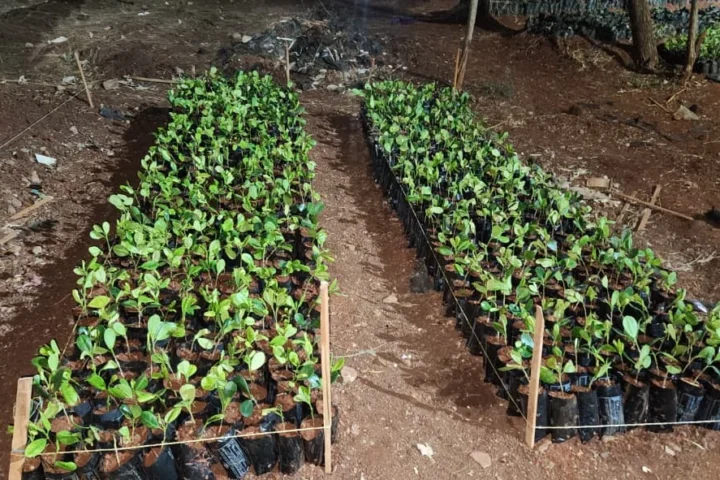
Successful reforestation requires more than just planting trees—it starts with quality seedlings that can thrive in diverse climatic conditions. Recognizing this, the Gakami Mustard Seed Foundation has taken a community-driven approach to tree planting by partnering with local nurseries in Murang’a and Kajiado Counties. These nurseries serve as the foundation for large-scale afforestation, ensuring a steady supply of both indigenous and exotic tree species to support Kenya’s reforestation efforts.

The Role of Community Nurseries in Conservation

By engaging with community groups to establish and maintain nurseries, the foundation not only ensures a consistent seedling supply but also fosters economic empowerment at the grassroots level. The benefits of this initiative include:

🌱 Increased Seedling Availability – Ensuring a diverse range of tree species for reforestation projects.
💰 Economic Upliftment – Providing local communities with income through the sale of seedlings.
🌍 Climate Adaptation – Selecting tree varieties that can withstand different climatic conditions, ensuring long-term survival.
🤝 Partnerships for Sustainability – Strengthening collaborations with organizations like the Kenya Forest Service to enhance reforestation efforts.

Tree Species Cultivated in the Nurseries

The community nurseries cultivate a wide range of trees, including:
Indigenous Trees – Such as Meru Oak and Mukau, which support biodiversity and ecological balance.
Exotic Trees – Like eucalyptus and pine, which are fast-growing and used for timber and environmental restoration.
Fruit Trees – Including mango, avocado, and citrus trees, which provide nutritional and economic benefits to communities.

A Sustainable Approach to Reforestation

The Mustard Seed Foundation does not just plant trees—it ensures that every seedling has the best chance of survival by sourcing from nurseries that provide healthy, well-adapted seedlings. Through this model:
More trees are planted and successfully grown, increasing forest cover.
Communities take ownership of environmental conservation.
Kenya moves closer to achieving the 15 Billion Tree Planting Initiative led by H.E. President Ruto.

Conclusion

By integrating community participation with environmental conservation, the nursery initiative by the Gakami Mustard Seed Foundation is creating a sustainable pathway to reforestation. This project not only supports Kenya’s afforestation goals but also empowers local communities, proving that conservation can be both impactful and economically beneficial.

🌍 Join us in growing a greener Kenya—one seedling at a time! 🌳💚

#TreeNurseriesKE #CommunityEmpowerment #15BillionTrees 🌱